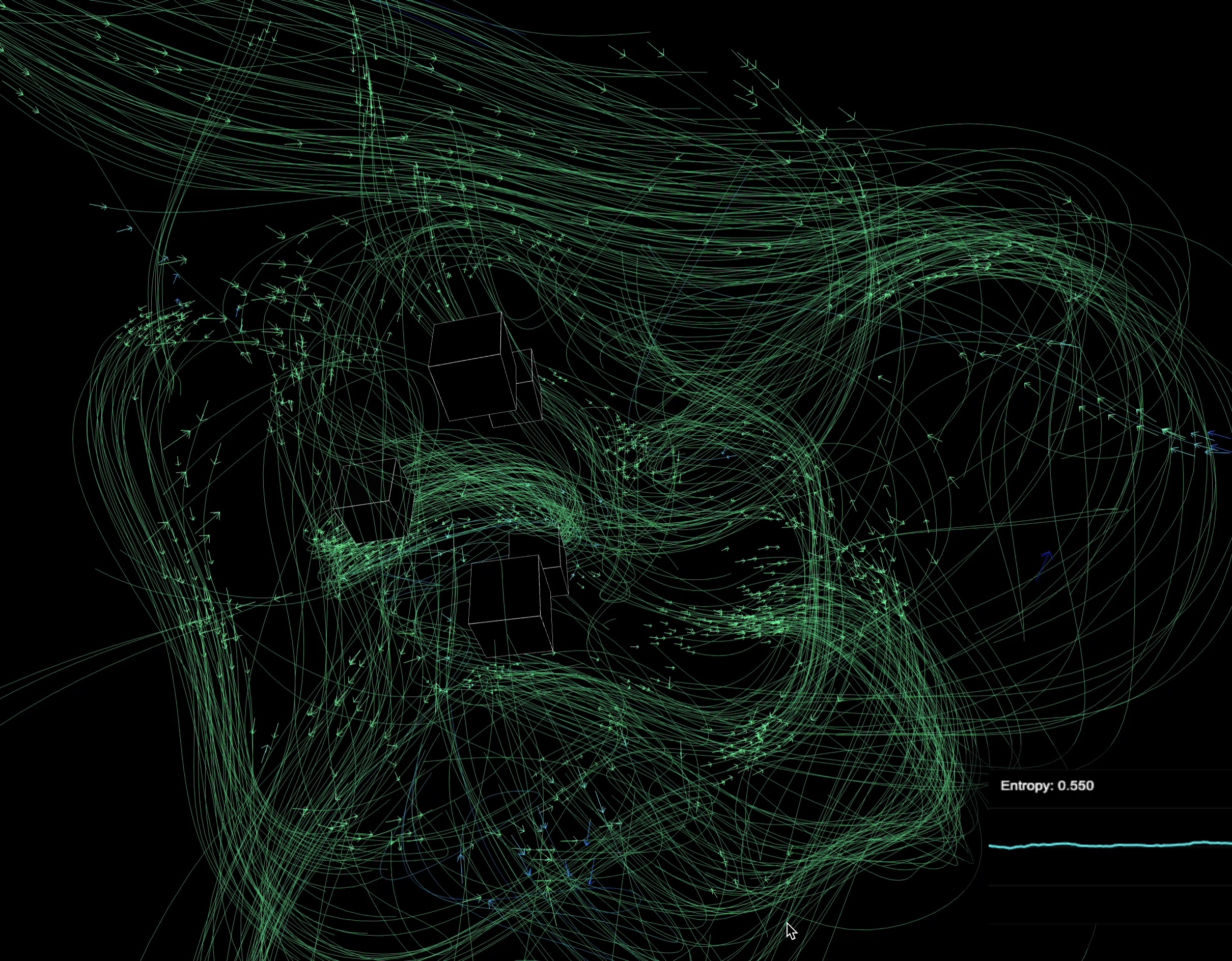
A boids simulation is a computer program that simulates the behavior of flocks of birds, schools of fish, or swarms of insects. It was first introduced by computer scientist Craig Reynolds in 1986. The simulation is based on three simple rules that dictate how the individual agents in the simulation (called "boids") move and interact with each other, resulting in complex emergent behavior similar to that observed in real-life flocks or schools.

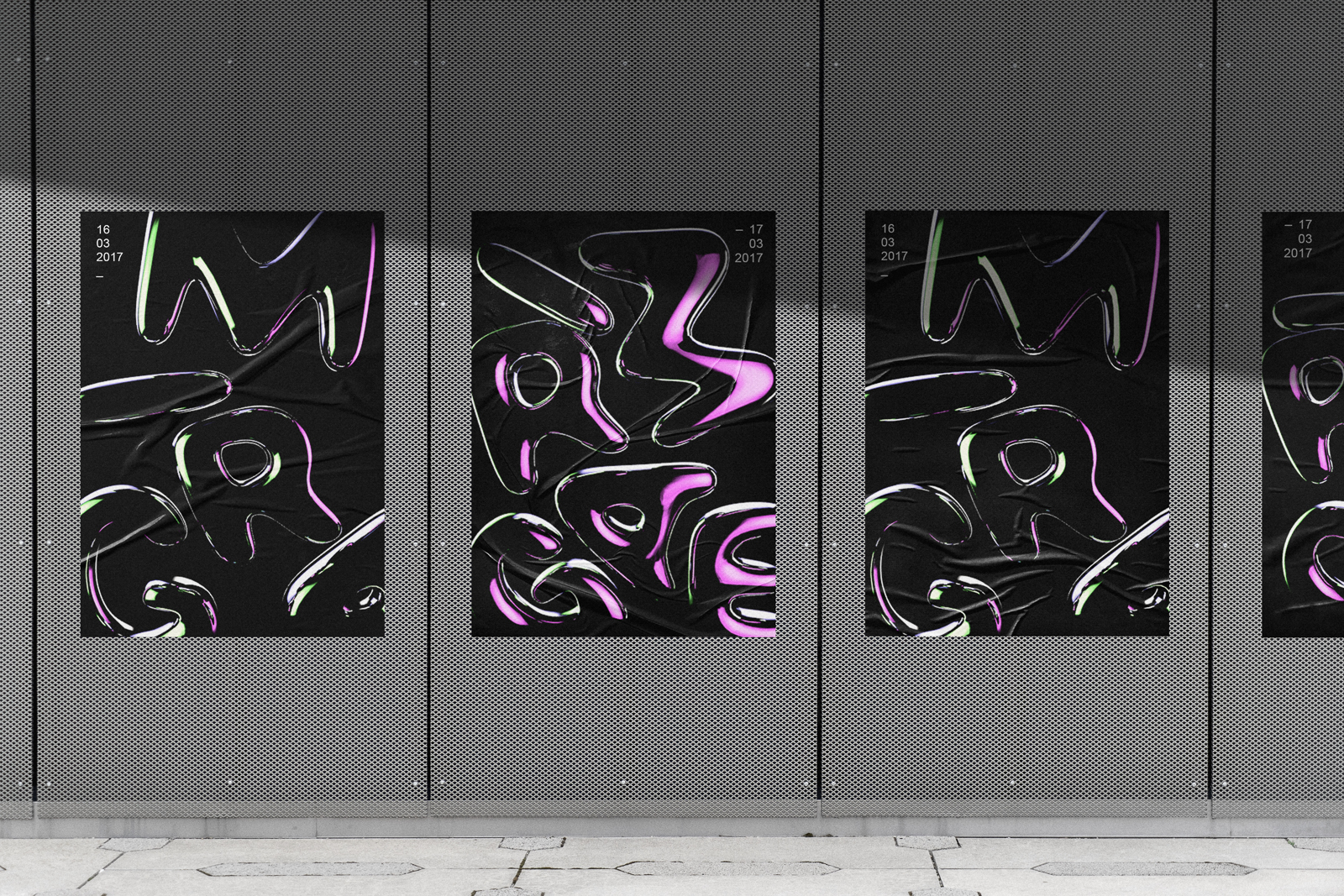
The Mirage Festival offers an ambitious and multidisciplinary program that showcases a panorama of digital cultures. To capture the richness of this contemporary creation fueled by technology, the festival offers a unique format centered around an exhibition tour and evenings of performances and concerts.

A neural radiance field (NeRF) is a fully-connected neural network that can generate novel views of complex 3D scenes, based on a partial set of 2D images.

A three-dimensional fractal is a form that repeats itself in an infinitely detailed manner when observed at different scales. This means that no matter which part of the fractal we examine, it exhibits similar characteristics to the larger whole. Three-dimensional fractals can be visualized using advanced graphic rendering algorithms. They can take on complex and fascinating shapes, such as spirals, branching structures, or intertwined patterns. The use of 3D modeling techniques allows for exploring these forms from different angles and making them more tangible.
.jpeg)